Bangladesh Internet Governance Forun 21th Programme


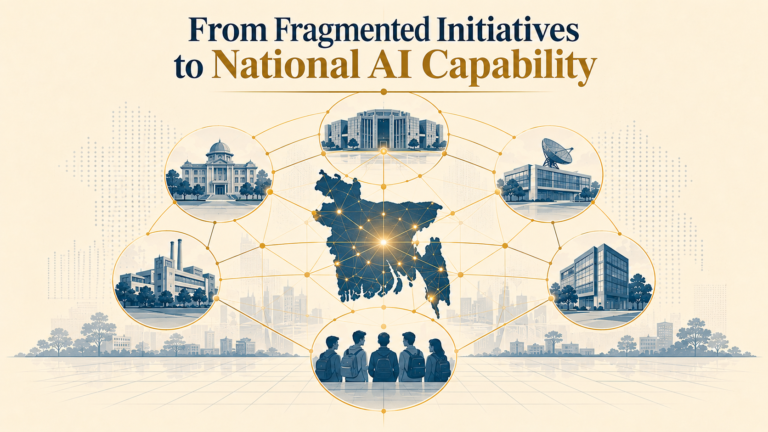
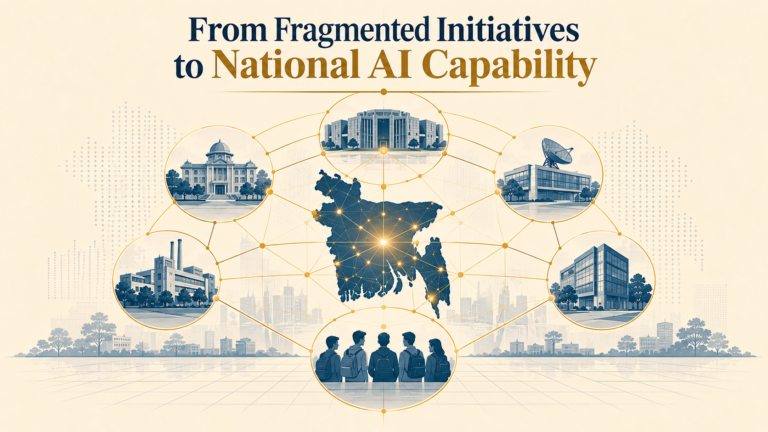
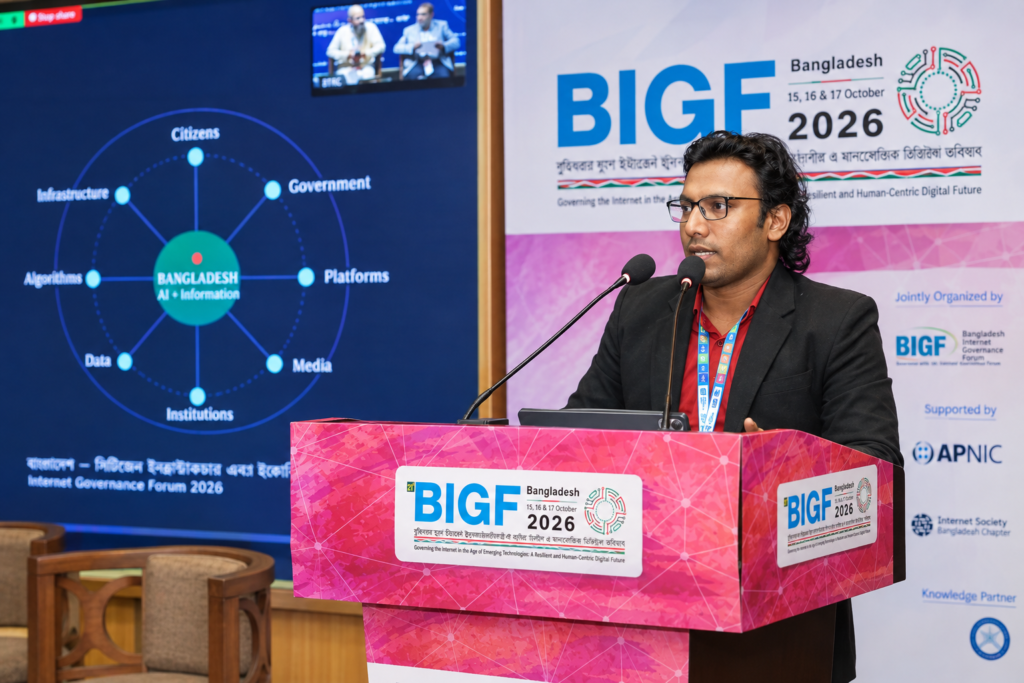
Nafiul Ahmad Rafi Delivers Keynote on AI Governance at the 21st Bangladesh Internet Governance ForumInternet Governance · AI Policy · Bangladesh · October 2026Nafiul Ahmad Rafi, Founding Director of Atlas AI Institute and an AI governance and public policy researcher, delivered a keynote address on artificial intelligence governance at the 21st Bangladesh Internet Governance Forum programme at the Bangladesh Telecommunication Regulatory Commission (BTRC) headquarters in Agargaon, Dhaka.His participation brought AI governance into the broader discussion on Bangladesh’s digital future, highlighting the importance of institutional readiness, regulatory capacity, and accountable approaches to emerging technologies.As artificial intelligence increasingly influences public administration, economic activity, information systems, and digital services, governance has become a central question for policymakers and institutions. For Bangladesh and other developing economies, the challenge is not simply to adopt new technologies, but to establish the institutional foundations needed to ensure that their use serves the public interest.AI Governance and Bangladesh’s Digital FutureArtificial intelligence is creating new opportunities for innovation, public-service delivery, research, and economic development. At the same time, its growing use raises important questions about accountability, transparency, privacy, security, and the distribution of benefits and risks.For Bangladesh, addressing these questions requires a governance approach that reflects the country’s institutional capabilities, development priorities, and regulatory context.AI governance involves more than establishing high-level principles. It requires practical frameworks, clear institutional responsibilities, appropriate oversight mechanisms, and the capacity to assess and manage risks throughout the lifecycle of AI systems.Rafi’s research focuses on these institutional and policy dimensions, particularly the challenges facing developing and emerging economies as they navigate the rapidly evolving global AI landscape.From International Principles to Institutional ImplementationInternational discussions on AI governance have produced a growing body of principles, recommendations, and regulatory approaches. However, translating these principles into effective national arrangements remains a significant challenge.Countries differ in their administrative capacity, technical expertise, legal systems, economic resources, and levels of digital infrastructure. Consequently, governance approaches need to account for national circumstances while remaining attentive to international developments.For Bangladesh, this creates several important areas for policy consideration:Institutional readiness: Understanding whether public institutions have the expertise, resources, and coordination mechanisms required to oversee AI adoption.
Regulatory capacity: Developing proportionate policy instruments and oversight arrangements that address relevant risks without unnecessarily restricting beneficial innovation.Accountability and transparency: Clarifying responsibility for decisions involving AI systems and establishing appropriate mechanisms for review, explanation, and redress.Responsible public-sector adoption: Ensuring that the deployment of AI in public services is accompanied by suitable risk assessment, monitoring, and safeguards.Policy coordination: Improving cooperation among government agencies, researchers, technical communities, industry, and civil society.These areas are interconnected. Policies cannot deliver their intended outcomes without the institutional capacity to implement them, while technological adoption without appropriate governance can undermine public trust and accountability.The Growing Connection Between Internet Governance and AI PolicyInternet governance and AI governance are increasingly connected.Internet governance addresses the development, accessibility, security, stability, and management of the internet. Artificial intelligence introduces additional considerations involving data
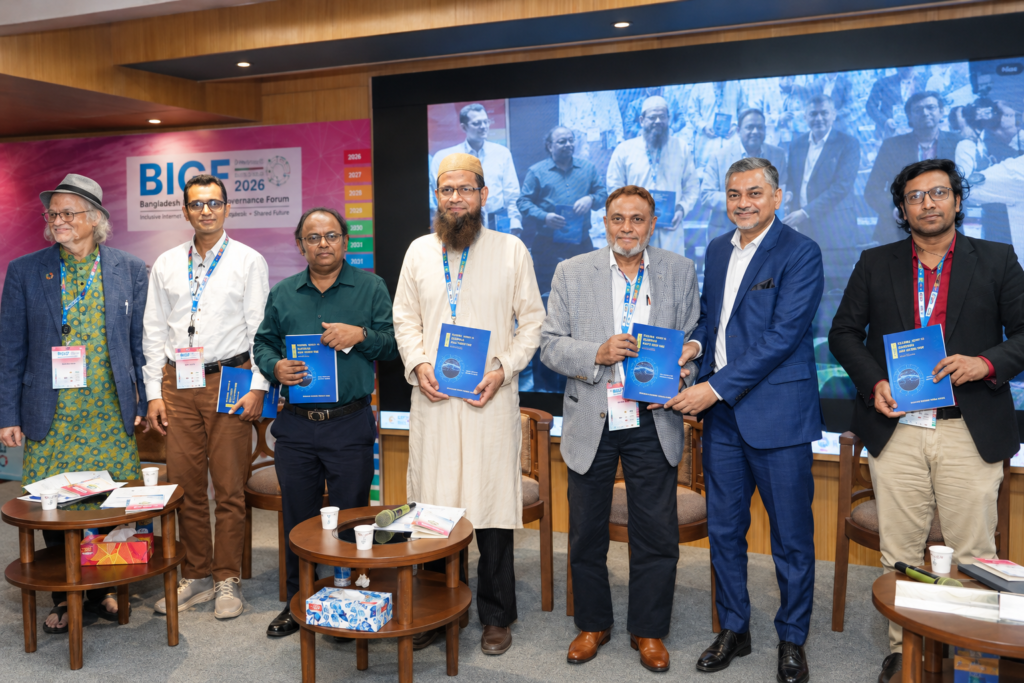
computational infrastructure, automated decision-making, online information, and the exercise of digital rights.AI systems increasingly operate within the same digital ecosystems that internet governance seeks to make accessible, secure, and reliable. Their effects can extend to information integrity, privacy, competition, public participation, and the relationship between individuals and institutions.This makes AI governance an increasingly relevant part of wider digital policy discussions.For Bangladesh, connecting these policy areas can help ensure that decisions about emerging technologies are considered alongside questions of institutional accountability, digital inclusion, public interest, and long-term national capacity.A multistakeholder approach is particularly important in this context. Governments, technical communities, industry, academia, researchers, and civil society each bring different forms of expertise and experience to discussions about the opportunities and risks of emerging technologies.Why a Global South Perspective MattersGlobal AI governance discussions must account for the different circumstances of countries across the world.Many developing economies face distinct challenges involving technical capacity, institutional resources, access to infrastructure, and representation in international policymaking. These conditions influence both the implementation of AI governance frameworks and the ability of countries to shape emerging international standards.A meaningful Global South perspective therefore requires more than including developing countries in international discussions. It requires strengthening their research capacity, producing locally relevant evidence, developing institutional expertise, and enabling their policymakers and researchers to contribute to the formation of global governance approaches.Rafi’s work examines AI policy and governance across Bangladesh, South Asia, and other developing regions, with a focus on comparative policy analysis, national governance frameworks, and institutional readiness.This research seeks to connect international policy developments with the practical realities of countries working to establish effective and context-sensitive approaches to AI governance.Research and Policy WorkAs the Founding Director of Atlas AI Institute, Rafi works on AI policy and governance research focused on Bangladesh, South Asia, and the wider Global South.His work includes comparative AI policy analysis, national governance framework development, institutional assessments, and research into the policy arrangements needed to support responsible AI adoption.Through these activities, he seeks to contribute to a stronger evidence base for policymakers and institutions navigating the implications of artificial intelligence.Participation in internet governance discussions provides an opportunity to connect this research with broader conversations about digital policy, technological development, and institutional responsibility.Looking AheadAs artificial intelligence becomes more deeply embedded in digital infrastructure and public and private services, the quality of governance arrangements will increasingly influence how societies experience its benefits and risks.For Bangladesh, the task is to develop approaches that are practical, accountable, and responsive to national priorities while engaging constructively with international policy developments.This requires sustained research, institutional coordination, technical understanding, and dialogue among stakeholders.The growing intersection between internet governance and artificial intelligence policy offers an important space for these conversations. Continued engagement can help strengthen Bangladesh’s capacity to evaluate emerging technologies, develop appropriate governance arrangements, and participate more effectively in shaping the future of digital policy.About Nafiul Ahmad RafiNafiul Ahmad Rafi is an AI governance and public policy researcher based in Dhaka, Bangladesh, and the Founding Director of Atlas AI Institute, a research initiative focused on AI policy and governance.His work explores AI regulatory frameworks, institutional readiness, comparative governance assessments, and the representation of developing economies in international AI policymaking.He is particularly interested in translating international AI governance principles into practical policy frameworks that reflect the institutional realities and development priorities of Bangladesh and the wider Global South.Event: Bangladesh Internet Governance Forum — 21st ProgrammeRole: Keynote speaker on AI governanceVenue: Bangladesh Telecommunication Regulatory Commission (BTRC), Agargaon, Dhaka, BangladeshDate: October 2026Research affiliation: Atlas AI InstituteExplore More- Research and Publications: https://nafiulahmadrafi.com/publication/- About Nafiul Ahmad Rafi: https://nafiulahmadrafi.com/about/- Atlas AI Institute: https://atlasai.institute/- Media and Press: https://nafiulahmadrafi.com/media/- AI Governance and Risk Advisory: https://nafiulahmadrafi.com/ai-governance-risk-advisory/